Last week, I caught myself slouching during my morning commute again. That familiar ache crept into my upper back after just 20 minutes hunched over the steering wheel. It hit me how much better I feel on days when I pay attention to my posture—more energy through lunch, less tension by evening, and even a calmer mind to unwind.
Good posture isn’t about standing like a soldier all day. It supports your spine, eases muscle strain, and boosts your breathing for steady calm. Think of it as a quiet ally against the daily grind. Let’s dive into quick ways to weave it in, starting now.
Quick Start: Three Tips to Straighten Up Right Now
Try these wherever you are. First, roll your shoulders back five times. Feel the release as you lift and drop them gently.
Next, check your ears. Line them up over your shoulders with a quick glance in a mirror or window reflection. This simple alignment fights the forward creep from screens.
For seated spots, lift your chest. Sit tall on your sit bones, then relax your shoulders down. Pair it with a breath: inhale to grow tall, exhale to settle without slumping.
Do one now during your next break. I use the ear check in line at coffee shops. It takes seconds but shifts your whole stance.
These build awareness fast. You’ll notice less fatigue by afternoon. Keep reading for day-long flow.
Start Your Day with a 4-Step Morning Posture Boost
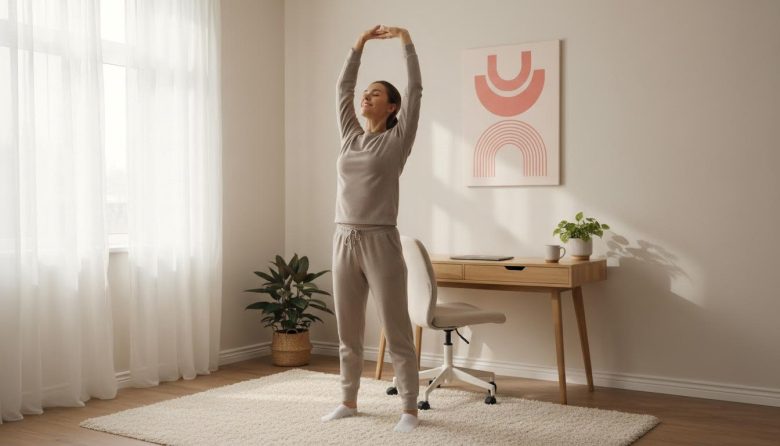
Begin at bedside. Stand with feet hip-width, reach arms overhead for 30 seconds (1 minute total). Breathe deep—in through nose, out through mouth—to wake your spine.
Step two: in the shower (2 minutes). Let warm water hit your back as you press palms to the wall, elbows bent. Slide arms up and down slowly. This opens your chest before clothes constrict.
At breakfast, sit with a 30-second check. Feet flat, back away from chair back slightly. Swap your usual lean for a supported tall sit. For mindful bites, check out our Beginner’s Guide to Mindful Eating Basics.
Final tweak: outfit adjust (1 minute). Choose looser layers or adjust backpack straps evenly. Roll shoulders back once dressed. Total routine: under 5 minutes.
I started this last month after stiff mornings. Now, I carry height through meetings. It sets a steady tone.
Flow right into your commute with these habits locked in. Next, tackle desk and drive time.
Hold Strong Through Commute and Desk Hours
Adjust your car seat first. Slide it back so knees bend slightly, then tilt the backrest to support your natural curve. Add a small towel roll at lower back if needed.
At your desk, swap every 30 minutes. Stand for calls or stretch: clasp hands overhead, lean side to side gently. This counters hours of typing hunch.
For phone use, hold it at eye level. Prop on a stack of books instead of cradling low. I caught my neck strain during emails—huge difference once swapped.
Lunch break win: my go-to chin tuck. Sit or stand tall, draw chin straight back like making a double chin (hold 5 seconds, repeat 5 times). Breathe normally. Takes 1 minute, resets forward head.
During a packed week, this saved my focus. Pair stretches with a short walk. Energy holds steady past 3 p.m.
These fit busy flows. As evening nears, ease the day’s build-up without effort.
Bust the After-Dinner Hunch in 5 Minutes
Start with wall angel (1 minute). Stand back to wall, arms at 90 degrees like a goalpost. Slide up and down slowly, keeping contact. Breathe out on the slide down for release.
Next, walk tall (3 minutes). Stroll your living room or block, imagine a string pulls your head up. Swing arms naturally. Add our Weekly Walking Plan to Build Lasting Fitness for more structure.
Couch swap: sit sideways with back supported, feet up. Avoid the slouch sink. Dim lights, breathe deep—inhale for 4, hold 4, exhale 6.
I do this post-dinner most nights. Tension melts, sleep improves. Quick reset before bed.
It bridges day to rest. For easier habits, see swaps ahead.
Make It Easier: Swaps for Real Life
Use sticky notes as cues. Place one on your monitor: “Ears over shoulders.” Glance triggers check.
Set phone reminders for commute stops or after dinner. A soft chime prompts chin tuck or wall angel.
Ask a partner for check-ins. During lunch or couch time, they tap your shoulder gently. Low-key accountability.
After long drives, swap heavy bags for lighter ones. These cut effort while building posture smarts.
Pick one swap today. Stacks with your routine seamlessly.
Posture Do’s and Don’ts for Everyday Moments
Glance at this quick reference for daily spots. It reinforces habits without thinking hard.
| Daily Moment | Do This | Don’t Do This |
|---|---|---|
| Morning routine | Bedside overhead stretch with deep breaths | Rush out of bed with forward bend |
| Desk work | Feet flat, screen at eye level, hourly stand | Slump into chair back fully |
| Phone use | Hold at eye level or use speaker | Cradle low against chest |
| Evening couch | Side-sit with back support | Sink into corner hunch |
| Walking commute | Head up, shoulders relaxed, arms swing | Look down at phone |
Use the table during lunch reviews. Spot one do, try it next shift. Builds memory fast.
After dinner, pair a do with steamed sides. Learn How to Cook Simple Steamed Veggies Perfectly for easy adds.
Ready for one small step? Try the chin tuck at lunch today. Notice the lift, then build from there.
Frequently Asked Questions
What if I forget during work?
Set a phone timer for every hour. If desk time pulls you in, stand for the first reminder. It restarts awareness without overload.
Does posture help back pain?
It eases strain over time. If pain persists, add gentle walks. Then see a pro if sharp or ongoing.
How often should I check posture?
Three times daily: morning, midday, evening. If you slouch often, add commute cues. Consistency beats perfection.
Any tips for standing desks?
Shift weight foot to foot every few minutes. If fatigue hits, drop heels on a box. Wear supportive shoes.
How to help kids with posture?
Make it fun: ear-shoulder games during homework. Model it yourself. If screen time hunches them, limit to 20 minutes straight.