Picture this: It’s 6 PM, you’re starving after a long day, and you want a healthy meal without the hassle. A well-organized kitchen makes quick prep possible—even on your busiest nights. This guide shares simple tweaks to set up your space for chopping veggies in minutes or blending smoothies during lunch breaks.
No big renos needed; just practical changes that fit your routine. Start small, like clearing one counter spot, and build from there. You’ll notice meals come together faster, leaving more time for what matters.
Quick Start: 5 Tips to Clear Space Today
Jump in with these 10-minute wins to feel the difference right away. Pick one or two to try during your next break. They target high-traffic spots for the biggest impact.
- Clear one counter spot for daily prep—toss expired items from the fridge door. This opens room for chopping carrots on the spot.
- Group fruits and veggies in clear bins at eye level. Reach for an apple instead of digging for yogurt.
- Stack cutting boards vertically in a narrow slot. Pull one out for quick salad assembly after work.
- Move snacks to upper shelves to grab apples over chips. It nudges healthier choices during evening munchies.
- Label jars for grains and spices in reach during dinner rush. No more pausing to hunt for cumin.
Try one now for an instant boost. Notice how it speeds up your next snack prep. Keep the momentum going into zones next.
Set Up Zones for Your Morning Smoothie or After-Work Stir-Fry
Divide your kitchen into zones: blending corner, chop station, and cook zone. Keeps tools handy without hunting. For small spaces, use drawer dividers for knives near the sink.
Set your blending corner near an outlet with a blender, straws, and fruit bowl. Prep smoothies in under five minutes before your commute. This setup cuts morning chaos.
The chop station goes by the sink—board, peeler, and colander ready. Wash spinach while chopping bell peppers. It flows naturally for lunch salads.
Cook zone by the stove: oils, spices, and tongs on a tray. Stir-fry veggies after dinner without steps back and forth. Adjust zones based on your daily flow.
Once zones click, your routines feel smoother. Link this to your 7-day plan for easy meal prepping by prepping ingredients right there. It saves even more time weekly.
Declutter Step by Step in 20 Minutes
Follow these 4 steps to sort without overwhelm—do one drawer at a time. Set a timer to stay focused. You’ll reclaim space fast.
- Empty and sort (5 min): Pull everything out; make keep, donate, trash piles. Be ruthless with duplicates like extra spatulas.
- Wipe and group (5 min): Clean surfaces; bundle like items (e.g., all measuring cups together). Wipe crumbs from sticky spots.
- Assign homes (5 min): Place most-used near action spots, like oils by stove. Less-used items go higher or back.
- Test run (5 min): Prep a snack; adjust if reaching feels off. Chop an apple to check flow.
Repeat weekly for lunch break drawers. This habit keeps clutter at bay. Move to stocking staples next for lasting wins.
After decluttering, your counters breathe easier. It pairs well with routines like staying hydrated—keep a water pitcher in the prep zone to sip while chopping. Check out how to stay consistent with daily hydration for tips that fit right in.
Stock Smart Staples That Prep in a Flash
Focus on easy-reach shelves for wash-and-go items. Swap bulky for stackable to save space. Stock what you grab daily for healthy eats.
Fridge door: jars of mustard, hot sauce, and yogurt—no more expired condiments blocking view. Middle shelves: bins of greens, berries, and carrots. Pull and rinse for instant salads.
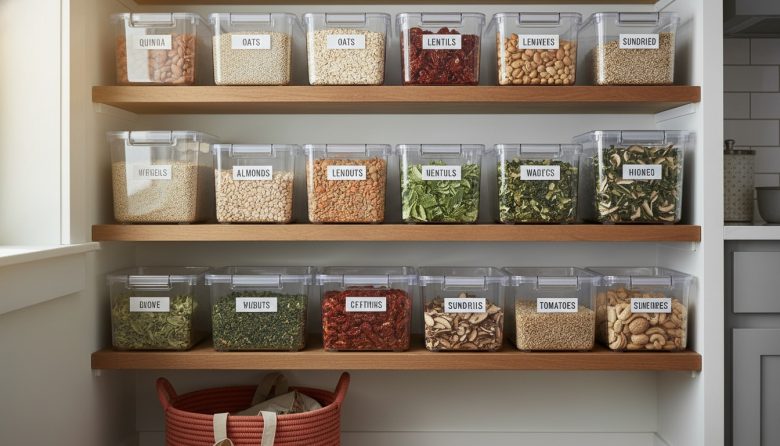
Pantry staples: oats, nuts, and canned beans in clear jars at waist height. Add pre-washed quinoa packets for quick sides. Rotate stock oldest first to avoid waste.
These picks mean less shopping trips. Prep quinoa during your commute wait or after dinner. It supports consistent sleep by simplifying evenings—see top tips to maintain consistent sleep patterns.
Start with five staples this week. Watch meals assemble quicker. Transition to tools that make prep effortless.
Pick Everyday Tools for 5-Minute Meals
Invest in one good knife, a quick-chop bowl, and stackable containers. Store them front-and-center for commute-day salads. Quality basics outperform gadget overload.
A sharp chef’s knife slices tomatoes thin in seconds. Pair with a stable board—store together in the chop zone. No more dull blades slowing you down.
One-hand chopper dices onions fast for stir-fries. Stackable glass containers hold prepped veggies for the week. Label with tape for grab-and-go lunches.
Mandoline for paper-thin zucchini ribbons adds crunch to wraps. Keep it in a drawer sleeve for safety. Test during a busy Tuesday prep.
These tools shine in real life. Reduce decision fatigue. Now, ease into shortcuts for your setup.
Make It Easier: Swaps and Shortcuts for Real Life
Limited cabinets? Use over-door racks. Hate mess? Line drawers with washable mats. For renters, magnetic strips hold knives off counters.
Busy mornings call for pull-out trays under sinks. They hold peels without clutter. Swap wire shelves for wood bins if rust bugs you.
Family shares space? Color-code bins—your greens in blue. Add hooks under cabinets for mugs, freeing shelves. These tweaks adapt to any kitchen size.
| Do | Don’t | Why It Helps Quick Prep |
|---|---|---|
| Keep knives in a block near the cutting board | Stuff them loose in a drawer | Grab and chop veggies in 30 seconds, no fumbling |
| Store spices in a lazy Susan by the stove | Hide them at the back of deep shelves | Season stir-fries during dinner without pausing |
| Use clear bins for produce in the fridge | Cram loose items on shelves | Spot and grab salad greens on busy mornings |
| Group oils and vinegars on a tray | Line them up randomly | Drizzle dressings fast for lunch wraps |
| Hang pots from a rail if space allows | Stack heavy ones in low cabinets | Reach pasta pots easily after work |
Pick one row to fix today. It transforms prep flow. Your kitchen now supports healthy habits effortlessly.
These swaps fit renters or tiny apartments. Test during grocery unload. You’ll prep faster all week.
FAQ
What’s the fastest way to start if my kitchen is tiny?
Use vertical space: magnetic knife strips and door racks. If no counter room, prep on a tray you pull out. Start with the Quick Start tips on one shelf—see changes in a day. Add drawer dividers next for utensils; they cost little and fit anywhere. Track your first smoothie time to feel the win.
How often should I redo the setup?
Quick monthly refresh (10 min); full declutter quarterly. Then, add one new habit like daily counter wipe. During weekly shops, swap one expired item. It keeps zones fresh without big efforts. Adjust based on your routine, like after holidays.
What if I share the kitchen with family?
Assign personal zones (your blender spot); label shared bins. Involve them in quick starts for buy-in. Discuss during dinner—what frustrates their prep? Set rules like no junk on fruit shelf. Compromise builds team habits for everyone’s meals.
Do I need fancy organizers?
No—dollar-store bins work. If budget allows, add drawer dividers. Test cheap first during weekend shop. Reuse Amazon boxes lined with paper for trials. Focus on function over looks; tweak as you use. It keeps costs low while boosting speed.
How does this save time on healthy meals?
Cuts hunt time by half; e.g., zoned setup means smoothies in 3 min vs 10. Track one week to see. You’ll chop more veggies naturally, hitting five-a-day easier. Less stress means consistent choices. Pair with stocked staples for under-15-minute dinners.
Grab a bin and sort your fridge door today—your next meal will thank you. Build on this with one zone tomorrow. Small steps add up to easier healthy eating every day.